
Relief for Real Estate? Finance Act of 2027
June 2026
Reading Time: 5 Min
The Finance Act of 2027 has been passed and it contains several provisions which are meant to provide relief for the real estate sector. The question remains whether these changes will be enough to revive the real estate sector.
The real estate tax rate for transactions has been modified. Previously, there was a tiered tax rate for both filers and non-filers on both property purchase and property sale (Section 236K and Section 236C, respectively). The tax rate was tied to the property’s sale value meaning higher value property transactions were penalized. Furthermore, the tax rates for non-filers were exorbitantly high.
The Finance Act 2027 dispenses with the tiered tax system for filers, replacing it with a flat tax rate for all property transactions regardless of transaction value. The system is maintained for non-filers.
Furthermore, the deemed income tax, a tax innovation introduced by the Federal Bureau of Revenue (FBR), also referred to as Section 7E, has been abolished. The tax was imposed on immovable property but was controversial. It assumed an amount of rent that could be generated from an unutilized property based on FBR rates, referred to as deemed rental income, and imposed a tax on it. This move raised many concerns from the public and experts on the validity of such a tax.
The tax changes are summarized in the table below:
Furthermore, FBR has recently revised its valuation rates downward for several cities in the country, in some cases lowering them by 35%. In Lahore, this has resulted in reduced valuation rates for Defence Housing Authority (DHA) societies.
Government sources claim this move was made to attract investment in real estate from overseas investors, particularly overseas Pakistanis in the Gulf. The expectation is that due to the recent upheaval in the Gulf, overseas Pakistanis may be willing to pull out money from places like Dubai and invest it in Pakistan. The reforms discussed above aim to facilitate any such moves.
| Tax Details | Tax Rate for filers FY (25-26) | Tax Rate for filers FY (26-27) | Tax Rate for non-filers (Both years FY 25-26 and FY 26-27) |
| Buyer’s Tax (Section 236K) | Up to 50M: 1.5% 50M to 100M: 2.0% Above 100M: 2.5% | 1.5% flat rate | Up to 50M: 12.0% 50M to 100M: 16.0% Above 100M: 20.0% |
| Seller’s Tax (Section 236C) | Up to 50M: 4.5% 50M to 100M: 5.0% Above 100M: 5.5% | 2.75% flat rate | Up to 50M: 10.0% 50M to 100M: 10.0% Above 100M: 10.0% |
| Deemed Income Tax (Section 7E) | 1% tax on deemed rental income of unutilized property | None | None |
More Policy and Regulations

SBP New Regulations for Housing Finance
The State Bank of Pakistan (SBP) has made amendments to its Prudential Regulations for Housing…

FCC bars conversions of land
The Federal Constitutional Court (FCC), the highest judicial authority in the land, has made an…
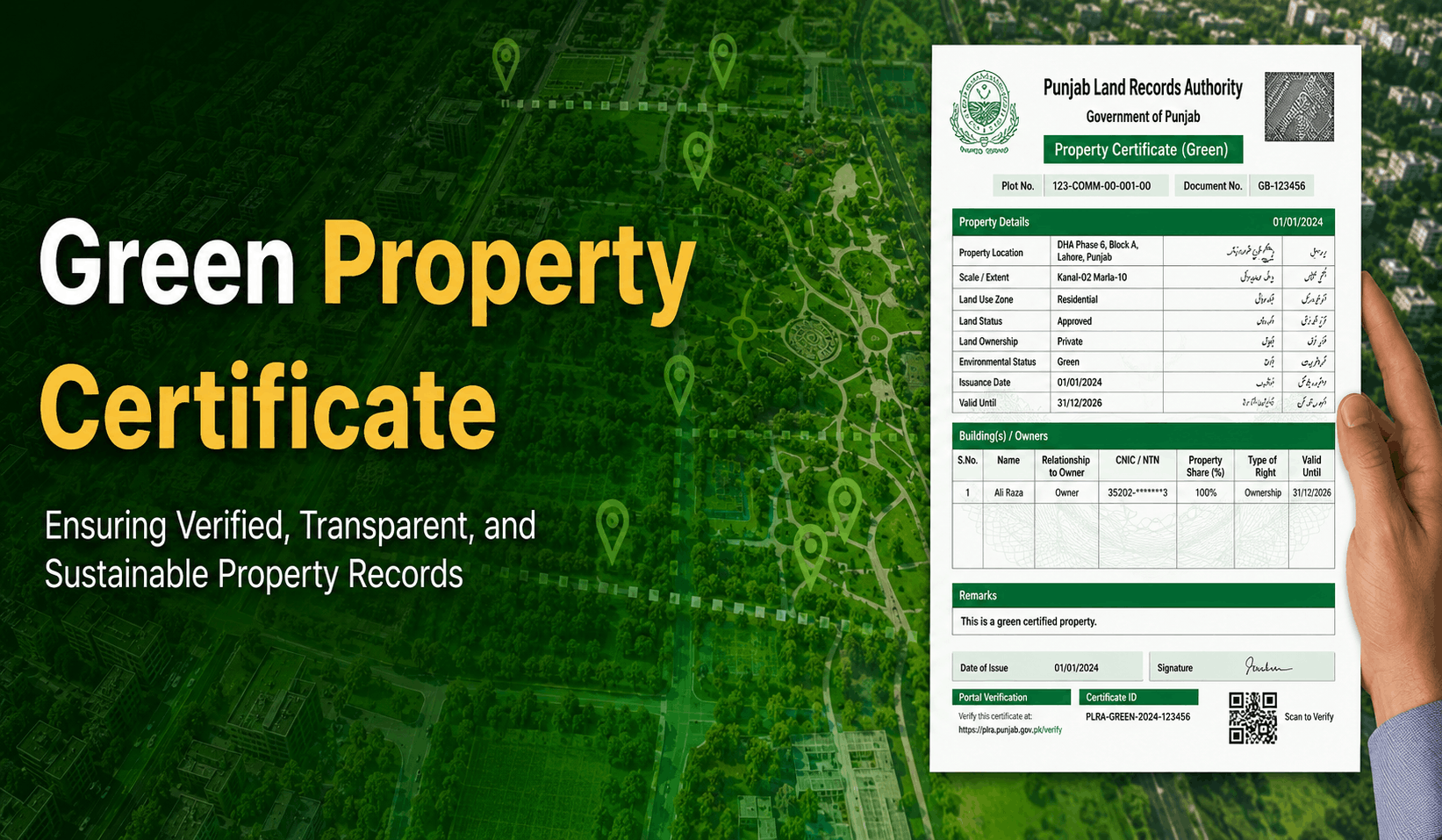
Punjab Government to overhaul Lahore’s property ownership system
The Punjab Government has launched a major initiative to replace all legal proofs of ownership…

Government moves to facilitate real estate sector
It appears that the government has taken an interest in the real estate sector, with…
